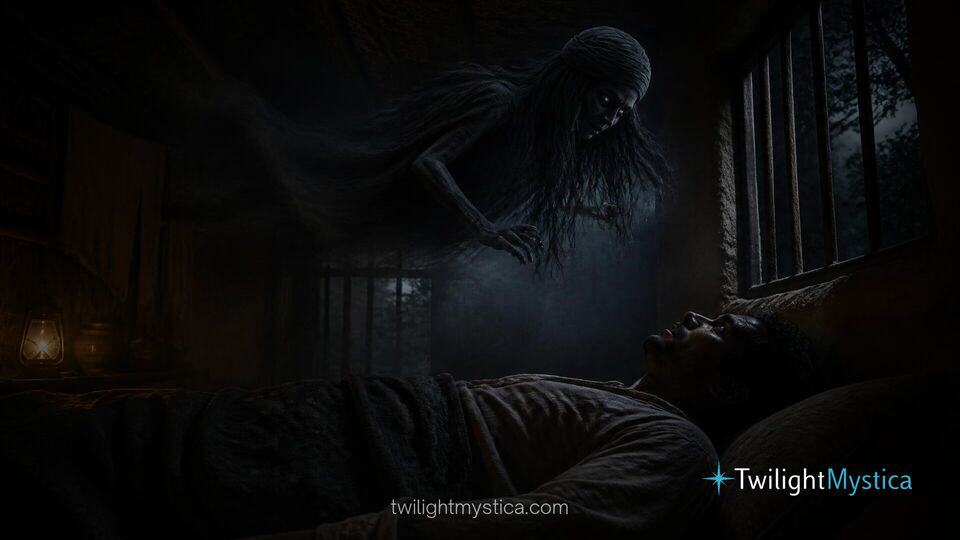
Across Bangladesh, many people grow up hearing warnings about a terrifying nighttime presence known as Boba Jinn. The story is familiar: someone wakes suddenly in the dark, fully aware of the room around them, but cannot move, cannot speak, and feels a crushing weight on the chest. In folk belief, this is not just a strange bodily event. It is often described as an encounter with a supernatural being.
The phrase Boba Jinn sleep paralysis captures this overlap between folklore and lived experience. On one side is the traditional explanation that a jinn, spirit, or unseen force has pinned the sleeper down. On the other is the modern medical view that sleep paralysis is a temporary state between sleep and wakefulness. What makes the legend so powerful is that both explanations begin with the same raw event: a person experiences helplessness, fear, and vivid sensation in the middle of the night.
This article explores what Boba Jinn means in Bangladeshi culture, why the experience feels so real, how communities interpret it, and what modern science says about it. Along the way, it helps explain why this legend has endured for generations.
Understanding Boba Jinn in Bangladeshi Cultural Beliefs
In Bangladeshi folklore, Boba Jinn is often described as an oppressive nighttime entity that attacks sleeping people. The word boba is associated with muteness or speechlessness, which fits the classic report that the victim tries to cry out but no sound comes. The jinn explanation gives shape to an otherwise frightening and confusing event.
In many families, especially where oral storytelling remains strong, Boba Jinn is not presented as abstract myth. It is told as something that happened to a cousin, a grandmother, a neighbor, or a friend studying late at night. That kind of storytelling gives the legend social authority. It moves from “old tale” to “shared truth.”
An analogy may help here: folklore often works like a cultural map. When people encounter an experience they do not fully understand, the map offers names, causes, and protective actions. Boba Jinn is one such map. It translates a private bodily episode into a meaningful cultural narrative.
The Concept of Bobaay Dhora in Rural Lore
A closely related expression in Bengali is bobaay dhora, loosely meaning “being seized by the mute one” or “being caught in a speechless state.” In rural lore, this is not merely poor sleep. It is a moment when the boundary between the visible and invisible world becomes thin.
People may describe the attack in highly specific ways: a heavy figure sitting on the chest, a shadow at the corner of the room, a sense that someone has entered the house, or the certainty that an unseen force is watching. These details vary, but the emotional pattern is strikingly consistent. The sufferer feels trapped in their own body.
For example, imagine someone sleeping alone during a humid summer night after several days of stress. They wake before dawn and see the outline of a cupboard, the window, and the door. Everything looks normal, yet their body refuses to obey. They try to lift a hand, whisper a prayer, or call a parent, but nothing happens. In a community where bobaay dhora is a familiar concept, the event is immediately recognizable.
What Boba Jinn Sleep Paralysis Feels Like
Although beliefs differ, reports of Boba Jinn sleep paralysis often follow a common structure. A person wakes suddenly but remains unable to move for a few seconds or minutes. The eyes may be open. Breathing can feel difficult, especially because panic makes every breath seem smaller. Many people also report pressure on the chest, a buzzing sensation, or the feeling that someone else is in the room.
This combination is so intense because it fuses three frightening elements at once: awareness, immobility, and dread. If an ordinary nightmare is like watching fear unfold on a screen, sleep paralysis is like stepping inside the scene while being unable to exit.
Phenomenology of Chest Pressure and Sudden Muteness
Two features appear again and again in Boba Jinn accounts: chest pressure and sudden muteness. In folk interpretation, these are signs of a spirit attack. In physical terms, they match the experience of waking while the body is still partially in a sleep state.
The chest pressure is often described as if someone is sitting on the body. The muteness feels equally terrifying because speech is one of the first tools people reach for in danger. When even that fails, fear can escalate instantly. A short episode may feel much longer because panic stretches time in the mind.
Think of it like a car engine turning on before the gears fully engage. Consciousness wakes up first, but the body’s movement system lags behind. During that lag, the brain may interpret internal sensations as an external threat. In a culture shaped by stories of jinn and spirits, that threat may be identified as Boba Jinn.
Why the Experience Seems Supernatural
Boba Jinn stories endure not simply because people are superstitious, but because the experience itself feels deeply convincing. It is vivid, embodied, and emotionally overwhelming. A person may see shadows, hear footsteps, sense a presence, or feel hands on the body. Even after the episode ends, the memory can remain sharp for years.
Another reason is that sleep paralysis often happens in ordinary settings: one’s own bedroom, a familiar bed, a house filled with sleeping family members. The contrast is jarring. Nothing outwardly dramatic has happened, yet the event feels like an intrusion from another realm.
Use Cases: How Communities Interpret the Event
- Religious interpretation: Some view it as a test, a warning, or a sign to increase prayer and spiritual discipline.
- Family cautionary tale: Elders may use the story to warn against sleeping alone, staying awake too late, or neglecting protective recitations.
- Social reassurance: Naming the event as Boba Jinn can comfort sufferers by telling them they are not alone and that others have endured the same thing.
- Moral framing: In some retellings, vulnerability is linked to stress, impurity, fear, or entering spiritually unsafe places.
These use cases show that folklore is not only about fear. It also creates explanation, ritual, and community response.
Modern Medical Perspective Versus Traditional Supernatural Views
From a medical perspective, sleep paralysis is generally understood as a temporary mismatch between waking awareness and REM sleep muscle atonia, the normal process that keeps the body from acting out dreams. During an episode, the mind may awaken before the body has fully regained movement. This can also be accompanied by dreamlike hallucinations, sensed presence, or pressure sensations.
Common triggers may include sleep deprivation, irregular sleep schedules, stress, anxiety, sleeping on the back, and disrupted rest. This does not make the experience imaginary. It means the terror is real even if the cause is physiological rather than supernatural.
The contrast between these views is not always a simple conflict between science and belief. In real life, many people hold both at once. They may accept that sleep paralysis has a medical basis while still interpreting the event through a spiritual lens. For them, science explains the mechanism, while folklore explains the meaning.
Example of a Dual Interpretation
A university student in Dhaka might say, “I know it was sleep paralysis because I had exams, barely slept, and was stressed. But it still felt like something entered the room.” That statement captures the overlap perfectly. Rational explanation does not erase emotional reality.
Folk Remedies and Spiritual Protections Against Boba Jinn
Traditional responses to Boba Jinn sleep paralysis often include prayer, recitation of Quranic verses, sleeping in a purified state, keeping a light on, avoiding isolation at night, or asking elders for blessings. Some households recommend specific surahs before sleep. Others advise changing sleeping position, reducing nighttime fear, or maintaining a calmer bedtime routine.
These remedies serve more than one purpose. Spiritually, they offer protection. Psychologically, they restore a sense of control. Socially, they connect the sufferer to family practice and inherited wisdom.
Where Folk Practice and Practical Care Meet
Interestingly, some traditional advice overlaps with modern sleep hygiene. Going to bed on time, reducing stress, avoiding exhaustion, and creating a soothing sleep environment can all help reduce episodes. In that sense, folklore and medicine sometimes arrive at similar habits through different paths.
For instance, if someone says, “Recite a prayer, relax your mind, and sleep regularly,” the spiritual framework may differ from clinical language, but the routine itself may still support better rest. This is why respectful discussion matters. Dismissing belief entirely often closes the door to helpful conversation.
The Deeper Meaning of the Legend
Boba Jinn is more than a ghost story. It reflects how human beings explain fear when fear arrives without warning. It also shows how culture shapes perception. The body may produce the same core event across many societies, yet each culture gives it a different face. In Bangladesh, that face is often Boba Jinn.
Seen this way, the legend functions like a bridge between the invisible biology of sleep and the visible language of community belief. It preserves memory, encodes warning, and validates an experience that can otherwise feel isolating.
There is also a broader lesson here. Folklore does not survive for centuries unless it speaks to something people repeatedly feel. Boba Jinn remains powerful because sleep paralysis is unforgettable. The legend gives that moment a name, a narrative, and a place within Bangladeshi cultural identity.
Recap: Boba Jinn Sleep Paralysis in Context
Boba Jinn sleep paralysis sits at the meeting point of folklore, psychology, and sleep science. In Bangladeshi tradition, it is often understood as a jinn attack marked by muteness, chest pressure, and terror during the night. In modern medicine, it is recognized as a temporary state in which the mind wakes before the body fully exits REM sleep.
Both views attempt to answer the same question: what happened in that frightening moment when a person was awake but powerless? Folklore answers with story, spirit, and protection. Science answers with sleep cycles, stress, and brain-body mismatch. Together, they reveal why the legend of Boba Jinn remains so compelling. It is not just about the supernatural. It is about the human need to make sense of the night.