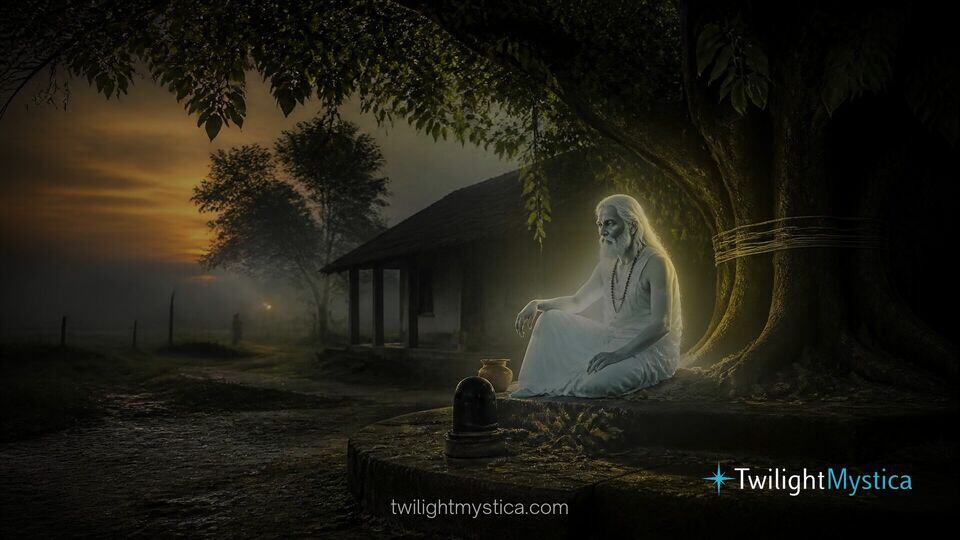
The Brahmadaitya legend occupies a fascinating place in Bengali folklore, where the supernatural is not always evil and the dead are not always feared in the same way. In many folk traditions, ghosts are imagined as wandering, dangerous, or sorrowful beings. A Brahmadaitya, however, is often portrayed as something more layered: a spirit linked to a deceased Brahmin, marked by ritual purity, sacred learning, and a strange mixture of dignity and otherworldly power.
That combination makes the figure memorable. The Brahmadaitya is not simply a monster used to frighten children at night. It is a cultural symbol that reflects how communities think about morality, death, status, sacred trees, and unseen protection. In stories told across Bengal, this spirit may bless, warn, punish, or guard. It can be imagined as a spectral elder, a watchful resident of village edges, or a powerful being whose presence demands respect.
This article explores what the Brahmadaitya is, where the idea comes from, why it matters in Bengali culture, and how it compares to other supernatural figures. Along the way, we will use examples, analogies, and practical storytelling use cases to show why this spirit still fascinates readers today.
Origins of the Brahmadaitya in Bengali Lore
The Spirit of the Departed Brahmin
At its core, a Brahmadaitya is traditionally understood to be the spirit of a Brahmin who died before achieving proper closure, peace, or ritual completion. In many retellings, the spirit remains earthbound because of an untimely death, unresolved duty, broken rites, or unfinished obligations. Because the deceased person belonged to the Brahmin class, the resulting ghost is viewed differently from ordinary spirits.
An easy analogy is to think of the Brahmadaitya as the folkloric equivalent of a respected elder who has crossed into the supernatural world but still carries the authority of his former life. Unlike a chaotic phantom, this figure often retains intelligence, composure, and a connection to sacred knowledge. That is why many stories describe the spirit not as mindless, but as aware and purposeful.
The Brahmadaitya legend also reveals an important theme in Bengali storytelling: death does not erase identity. A person’s social role, moral reputation, and ritual standing can follow them into folklore. In that sense, the Brahmadaitya is not merely a ghost story character. It is also a reflection of how traditional society understood spiritual continuity.
Distinct Traits and Sacred Symbols
Descriptions of Brahmadaityas vary from tale to tale, but some recurring traits appear again and again. The spirit is often imagined as tall, radiant, and imposing rather than decayed or horrifying. It may wear the traditional marks of a Brahmin, such as a sacred thread or simple garments associated with learning and ritual life. Sometimes the figure is said to appear under moonlight, seated in calm silence, or speaking in a measured voice.
These details matter because they distinguish the Brahmadaitya from more malevolent ghosts in South Asian folklore. If a common horror spirit is like a storm that strikes without warning, a Brahmadaitya is more like an old temple bell: solemn, resonant, and impossible to ignore. Its power lies not only in fear, but in presence.
Sacred trees also function as major symbols in the Brahmadaitya legend. The spirit is frequently associated with banyan and bel trees, both of which carry religious and cultural significance. This connection reinforces the idea that the Brahmadaitya belongs to the borderland between worship and haunting, reverence and caution.
Understanding the Brahmadaitya Legend in Folk Imagination
To understand why this figure endures, it helps to see the Brahmadaitya as a bridge between categories. It is both ghost and guardian, both unsettling and protective. Folklore often relies on these mixed identities because they feel closer to real life. People are rarely purely kind or purely dangerous, and supernatural beings in oral traditions often mirror that complexity.
In village imagination, the Brahmadaitya could explain strange sounds near trees, unexpected acts of good fortune, or warnings that seemed to arrive from nowhere. If a traveler was saved from danger after ignoring a risky path, some might say a sacred spirit intervened. If someone disrespected a holy place and later suffered misfortune, the same spirit could be blamed. This flexibility gave the legend lasting power.
A modern comparison might be the idea of a neighborhood guardian with strict rules. Imagine a caretaker who protects the area, helps the deserving, and disciplines the arrogant. That image captures much of the emotional logic behind the Brahmadaitya. It is not random terror. It is supernatural order.
Role in Village Life and Belief Systems
Residing in Sacred Banyan and Bel Trees
In rural Bengali belief, certain trees are not just plants; they are living landmarks of memory, ritual, and mystery. The banyan tree, with its enormous roots and shadowy canopy, often appears in folklore as a dwelling place for spirits. The bel tree, linked with sacred practice, adds another devotional layer. When stories place a Brahmadaitya in such locations, the setting does much of the narrative work.
Think of these trees as natural shrines in the folk imagination. They are places where the ordinary world seems thinner, where day and night carry different meanings, and where respect becomes a form of protection. A Brahmadaitya living in one of these spaces is therefore not random decoration. The habitat reinforces the spirit’s authority.
This belief had real social use. It encouraged people to treat certain places carefully, avoid reckless behavior after dark, and maintain reverence for sacred landscapes. In practical terms, the legend worked like cultural guidance wrapped in story. Instead of posting a warning sign, a community passed down a tale.
Benevolent Acts versus Wrathful Encounters
One of the most compelling aspects of the Brahmadaitya legend is its moral duality. The spirit may help honest, humble, or needy people. It may offer protection, guidance, or hidden blessings. In some tales, a Brahmadaitya rewards those who show courtesy near sacred places or who uphold religious and ethical norms.
But the same spirit can turn severe when insulted. Mockery, disrespect, greed, or desecration may trigger punishment. This makes the Brahmadaitya similar to many sacred figures in world folklore who are benevolent when honored and dangerous when violated.
As an example, imagine two travelers passing a banyan tree at dusk. One pauses, offers respectful silence, and moves on. The other laughs, breaks branches, and boasts that no spirit can touch him. In a folk narrative, the first traveler may reach home safely, while the second stumbles into fear, illness, or uncanny bad luck. The story teaches behavior through contrast.
This is one reason the legend persists: it functions as a moral framework. The supernatural event is dramatic, but the lesson is social. Respect what is sacred. Do not be arrogant. Understand that the world contains forces larger than yourself.
Brahmadaitya's Place in Traditional Literature
The Brahmadaitya appears in the wider stream of Bengali oral storytelling, anecdotal village tales, and literary adaptations that draw from folklore. Traditional literature often preserves such beings not only for entertainment, but also to capture regional attitudes toward hierarchy, ritual, fear, and fate. In these stories, the Brahmadaitya can appear as a side character, a guardian presence, or the central mystery around which the plot turns.
Literarily, the figure is useful because it resists simple classification. A writer can use a Brahmadaitya in a cautionary tale, a ghost story, a philosophical fable, or even a gently comic encounter where a human learns humility. This flexibility helps explain why the legend travels so well across generations.
There is also a tonal difference worth noting. Not every ghost in Bengali literature is designed for pure horror. Some are reflective, ironic, or morally instructive. The Brahmadaitya fits comfortably in this tradition because it carries both eerie atmosphere and ethical meaning.
Use Cases in Modern Storytelling and Interpretation
Today, the Brahmadaitya legend remains valuable in several ways. For educators, it offers a case study in how folklore preserves social values. For writers, it provides a character archetype richer than a standard ghost. For readers of comparative mythology, it shows how spirits can embody status, ritual identity, and local ecology all at once.
- In fiction: a Brahmadaitya can serve as a mysterious protector of an ancestral home or sacred grove.
- In cultural studies: the legend helps explain how communities blend religion, environment, and oral memory.
- In film or theater: the spirit offers visual symbolism through trees, sacred marks, moonlit settings, and moral tension.
- In classroom discussion: it can be compared with guardian spirits, revenants, or morally complex ghosts from other traditions.
For example, comparing the Brahmadaitya to a library guardian can help modern audiences understand it. A library guardian would value knowledge, demand silence, protect the space, and react badly to disrespect. That image, while modern, captures the spirit’s combination of sacred authority and conditional benevolence.
Why the Legend Still Resonates
The Brahmadaitya continues to resonate because it speaks to universal concerns through local imagery. People everywhere wonder what remains after death, whether moral actions matter, and whether sacred places deserve special treatment. Bengali lore answers those questions through a spirit who is neither wholly comforting nor wholly terrifying.
In an age of fast entertainment, the Brahmadaitya legend also reminds us that folklore can be subtle. A spirit does not need to scream from the darkness to be powerful. Sometimes the most enduring supernatural figure is the one who sits quietly beneath a tree, watching, judging, and remembering.
Recap: Why the Brahmadaitya Legend Matters
The Brahmadaitya legend is more than a ghost story from Bengal. It is a cultural lens through which we can see ideas about sacred identity, unfinished duty, moral conduct, and the hidden life of the landscape. As the spirit of a departed Brahmin, the Brahmadaitya stands apart from ordinary specters. It carries dignity, spiritual weight, and a strong bond to sacred trees and village belief.
Its stories endure because they do several things at once. They entertain with mystery, teach with moral contrast, preserve respect for places and rituals, and give supernatural form to social memory. Whether encountered in oral tale, literary adaptation, or modern reinterpretation, the Brahmadaitya remains one of the most distinctive figures in Bengali folklore.
For anyone exploring South Asian mythic traditions, the Brahmadaitya offers a powerful example of how legends can hold fear and reverence in the same breath. That balance is exactly what makes the figure unforgettable.