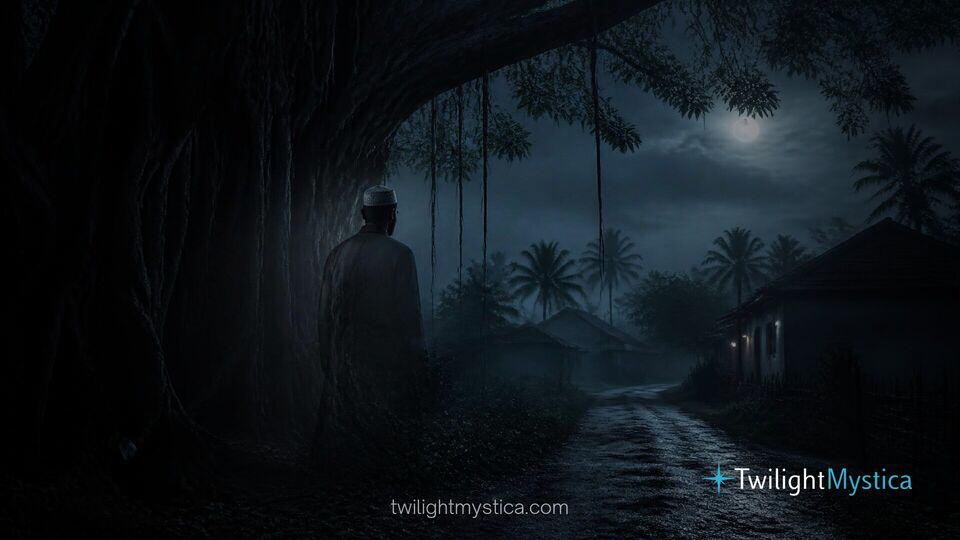
The Mamdo Bhoot legend occupies a fascinating place in Bengali folklore, where ghosts are not merely monsters but carriers of memory, warning, identity, and cultural imagination. In Bengali storytelling traditions, a bhoot is a ghost or spirit, yet not all bhoots are alike. Some are tragic, some mischievous, and some exist as eerie presences tied to landscape and social beliefs. Mamdo Bhoot stands out as a spectral wanderer often associated with rural settings, liminal spaces, and the uneasy feeling that the ordinary world may be hiding something uncanny just beyond sight.
For readers unfamiliar with the tradition, it helps to think of Mamdo Bhoot as a folklore figure shaped by both fear and familiarity. Like the wandering spirits found in many cultures, this ghost is part cautionary tale, part social symbol, and part entertainment. The legend survives because it is flexible: elders use it to explain danger, storytellers use it to create atmosphere, and modern audiences use it to reconnect with regional heritage. To understand why the tale remains compelling, we need to look at its cultural roots, its role in local belief, and the way it continues to evolve today.
Cultural Roots of the Mamdo Bhoot
Origins in Bengali Village Lore
The Mamdo Bhoot legend emerges from the rich oral traditions of Bengal, where folk beliefs developed in close relation to rivers, fields, village paths, bamboo groves, and old trees. In such settings, the supernatural often felt woven into daily life. A lonely road at dusk, a pond hidden behind reeds, or a banyan tree casting unusual shadows could all become stages for ghostly narratives. Mamdo Bhoot belongs to this world of whispered warnings and fireside tales.
In many versions of the story, Mamdo Bhoot is linked with the idea of a restless wandering spirit. The name itself carries a distinct cultural flavor in Bengali storytelling, and its associations often point to communities, identities, and historical coexistence within Bengal’s social fabric. As with many folk figures, there is no single official version. Instead, the legend changes from village to village, much like a folk song that keeps its melody while the lyrics shift over time.
An easy analogy is to think of Mamdo Bhoot as a local legend shaped the way a river shapes its banks. The core idea remains recognizable, but each community leaves its own mark on the tale. One village may describe the spirit as mournful and silent, while another portrays it as deceptive and unsettling. That variation is not a flaw; it is a key feature of living folklore.
Visual Descriptions and Characteristics
Descriptions of Mamdo Bhoot vary, but several recurring traits give the figure its eerie appeal. It is often imagined as a shadowy, human-like presence seen in dim light, especially at night or around twilight. Sometimes it appears thin, pale, and elongated. In other accounts, it is marked by unnatural movement, glowing eyes, a drifting gait, or a sudden appearance in places where no one should be standing.
What makes this ghost memorable is not just how it looks but how it behaves. Mamdo Bhoot is less like a roaring cinematic monster and more like a wrong note in a familiar song. It may call out to travelers, lurk near abandoned places, or create uncertainty by appearing at a distance and then vanishing. This subtlety is central to its power. The fear comes from ambiguity: did someone truly see a ghost, or did darkness and expectation transform an ordinary sight into something supernatural?
As an example, imagine a villager returning home late at night along a narrow earthen road. A figure stands beneath a tree, motionless. The traveler looks again, and the figure is gone. Folklore steps into that gap between first glance and second glance. Mamdo Bhoot lives in that moment of doubt.
Role in Local Supernatural Beliefs
The Mamdo Bhoot legend is more than a spooky story. It functions within a broader system of local supernatural beliefs that historically helped communities make sense of danger, death, isolation, and the unknown. In a world without electric lighting, modern policing, or instant communication, the night carried real risks. Folklore gave those risks a face.
Desolate Locations and Tree Hauntings
Many ghost traditions in Bengal are deeply tied to place, and Mamdo Bhoot is no exception. It is frequently associated with desolate locations: old grave sites, abandoned houses, riverbanks, crossroads, and large trees. Trees, especially ancient ones with sprawling branches, often act as natural anchors for supernatural belief because they appear both protective and ominous. During the day they provide shade; at night they become silhouettes full of hidden movement.
This place-based quality gives the legend practical use. Adults could warn children not to wander near dangerous ponds, unstable ruins, or isolated paths by invoking Mamdo Bhoot. In that sense, the ghost worked like a cultural safety sign. Instead of posting a modern warning board, a community might pass down a story: do not go there after dark, because a spirit roams that place.
There is a useful comparison here to the way fairy tales in other parts of the world warned children about dark forests or strangers on lonely roads. Mamdo Bhoot serves a similar purpose. The supernatural packaging makes the lesson unforgettable.
Psychological and Social Significance
One reason the Mamdo Bhoot legend endures is that it speaks to emotions people still recognize: loneliness, uncertainty, grief, and fear of what cannot be fully explained. Ghost stories often thrive where human psychology meets environmental tension. A creaking branch, distant footsteps, fog over water, or an unfamiliar voice can easily become charged with meaning when listeners already believe a place is haunted.
Socially, such legends also help communities tell stories about boundaries. Who belongs in a place, and who does not? When is it safe to travel? What happens when one ignores custom or caution? A spirit like Mamdo Bhoot can symbolize disorder entering everyday life. It reminds listeners that the world is not entirely controllable.
There is also a communal dimension. Telling ghost stories binds people together. A family sharing stories during a power cut, friends trading supernatural rumors, or elders recounting village incidents all participate in preserving collective identity. In this use case, the Mamdo Bhoot legend acts almost like cultural glue. It keeps language, memory, and local texture alive across generations.
Examples of Social Function
- Child guidance: warning young people to avoid dangerous places after sunset.
- Mourning and memory: giving symbolic shape to unresolved death or absence.
- Community bonding: creating shared experiences through storytelling.
- Moral framing: reinforcing caution, respect, and awareness of place.
Mamdo Bhoot in Modern Storytelling
Today, the Mamdo Bhoot legend survives not only in oral tradition but also in literature, illustrated retellings, digital media, horror discussions, and broader interest in South Asian folklore. Modern storytelling often reshapes old spirits for new audiences. Some portray Mamdo Bhoot as a frightening paranormal being, while others present it more as a cultural icon tied to Bengal’s storytelling heritage.
This shift matters because folklore rarely remains fixed. Just as classic myths have moved from oral tales to novels, films, and online essays, Bengali ghost lore has also entered new formats. A contemporary writer may use Mamdo Bhoot to build suspense in a short story. A podcaster might frame it as part of regional supernatural history. An artist could depict the figure visually, emphasizing atmosphere over literal description.
For modern readers, one of the best ways to understand the legend is to compare it with a layered character rather than a single monster type. Mamdo Bhoot is like a mask worn differently in each performance. In one version it represents fear of the dark; in another, nostalgia for village life; in another, the persistence of old belief in a rapidly modernizing world.
Why the Legend Still Resonates
The enduring appeal of the Mamdo Bhoot legend comes from its balance of specificity and universality. It is deeply Bengali in language, mood, and setting, yet its core themes are global. Nearly every culture has stories of wandering spirits tied to unfinished business, dangerous places, or social memory. What makes Mamdo Bhoot distinctive is the landscape it inhabits and the cultural texture surrounding it.
There is also renewed interest in regional folklore because many readers want stories that feel rooted in place. In a media environment filled with familiar horror tropes, legends like Mamdo Bhoot offer something fresher and more intimate. They bring with them village roads, humid nights, rustling leaves, and inherited caution. They do not just tell us what people feared; they show us how people lived.
How to Read the Legend Today
Modern audiences can approach the Mamdo Bhoot legend in several ways. Some may read it as supernatural belief. Others may enjoy it as symbolic storytelling. Still others may see it as a cultural artifact revealing how Bengali communities processed uncertainty and danger. All three approaches are useful, and they can coexist.
For example, a folklore student might analyze the legend for recurring motifs. A horror fan might focus on the eerie atmosphere. A member of the Bengali diaspora might find in it a connection to language, childhood memory, and ancestral storytelling. These are all valid use cases, and together they show why folklore remains alive long after the original setting has changed.
What the Mamdo Bhoot Legend Reveals About Folklore
At its heart, the Mamdo Bhoot legend reveals that folklore is not simply about believing or disbelieving in ghosts. It is about how communities map emotion onto place. It is about how stories become tools for warning, remembering, and imagining. A figure like Mamdo Bhoot may seem spectral, but the needs it serves are deeply human.
In that way, the legend works like a lantern in the fog. It does not erase uncertainty; it gives uncertainty a shape. By naming fear and placing it in a story, people can share it, pass it on, and even enjoy it. That is one reason such tales last. They transform the unknown into narrative.
Recap: Why the Mamdo Bhoot Legend Matters
The Mamdo Bhoot legend remains a compelling part of Bengali lore because it combines atmosphere, cultural identity, and social meaning. Rooted in village storytelling, shaped by local landscapes, and sustained through oral tradition, Mamdo Bhoot represents more than a ghostly wanderer. It is a symbol of how communities interpret danger, memory, and the uncanny.
Whether viewed as a frightening spirit, a moral caution, or a piece of living folklore, Mamdo Bhoot continues to fascinate because it speaks to universal human instincts through distinctly Bengali imagery. Its desolate paths, haunted trees, and spectral appearances may belong to legend, but the emotions behind them are timeless. That is what gives the story its lasting power.