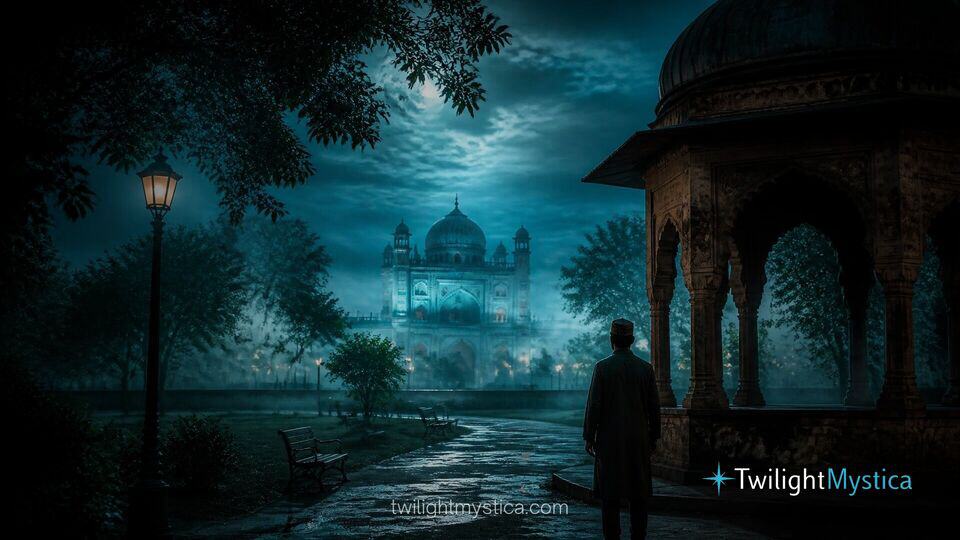
Bahadur Shah Park, located in the historic heart of Old Dhaka, is more than a public square with colonial-era significance. For many locals, it is also the setting of one of the city’s most persistent supernatural legends. The Bahadur Shah Park ghost story blends recorded history, collective trauma, oral tradition, and the human tendency to give fear a voice. That combination is what makes the park so compelling: it is not merely said to be haunted because it is old, but because it is tied to a deeply painful chapter in South Asian history.
To understand why stories of whispers, apparitions, and cries in the night continue to surround the park, it helps to look at both the documented past and the folklore that grew around it. Like many haunted sites around the world, Bahadur Shah Park functions almost like a memory container. In the same way a scar on the body marks an old wound, the legend marks a place where violence and grief were never fully forgotten.
This article traces the origins of the haunting legend, explains why it endures, and explores how the park sits at the crossroads of history and myth in Bangladeshi culture.
What Is Bahadur Shah Park?
Bahadur Shah Park is a historic landmark in Old Dhaka, formerly known as Victoria Park during the British colonial period. Today, it is recognized as an important memorial space, but it also occupies a powerful place in public imagination. People visit it as a historical site, pass by it in the flow of everyday city life, or speak of it in hushed tones as a place that feels unnaturally heavy after dark.
That dual identity is central to its reputation. By day, it can appear like a reminder of Dhaka’s layered past. By night, in popular storytelling, it becomes something else entirely: a stage where history is believed to echo back. This is one reason the park’s legend has survived for generations. It serves two use cases at once: as a historical marker for those seeking the truth of the past, and as a cautionary or atmospheric tale for those drawn to the supernatural.
An easy analogy is to think of Bahadur Shah Park as both an archive and a mirror. It archives a traumatic event in public memory, and it mirrors the fears, values, and imagination of the community around it.
The Historical Tragedy Behind Bahadur Shah Park
The 1857 Sepoy Revolt Executions
The darkest associations of Bahadur Shah Park are linked to the aftermath of the 1857 Sepoy Revolt, the widespread uprising against British rule in the Indian subcontinent. In Dhaka, those accused of participating in or supporting the rebellion faced brutal punishment. Historical accounts and local memory hold that rebels and suspected sympathizers were publicly executed near the site, with hangings carried out as a warning to others.
Public execution sites often become the nucleus of ghost lore because they compress terror, spectacle, and grief into a single location. Bahadur Shah Park fits that pattern. If a battlefield is remembered for chaos, an execution ground is remembered for finality. The stories attached to the park suggest that the dead did not simply disappear from memory; instead, their suffering became part of the landscape.
This is where the haunting legend becomes more than a simple campfire tale. For many, the idea of spirits lingering is symbolic. It expresses the belief that unjust deaths leave a moral residue. Even people who do not believe in ghosts may still understand the metaphor: some places feel heavy because history there was heavy.
Why Traumatic Sites Attract Haunting Narratives
There is a broader cultural pattern at work here. Across the world, places associated with execution, imprisonment, war, or betrayal often develop stories of restless spirits. These narratives help communities explain why certain places feel different. In practical terms, ghost stories become a tool for carrying historical memory forward, especially in societies where oral storytelling remains powerful.
In the case of Bahadur Shah Park, the haunting legend acts almost like a folk memorial. Instead of a plaque alone telling people what happened, the ghost story keeps the emotional truth alive. It turns history into something people feel, not just something they read.
Bahadur Shah Park Ghost Story and Its Most Common Versions
The Bahadur Shah Park ghost story does not exist as a single fixed narrative. It survives in multiple versions, which is typical of urban folklore. Some stories describe shadowy figures moving between trees or near the monument at night. Others mention distant cries, chains, footsteps, or voices that seem to come from nowhere. In some retellings, passersby sense a sudden drop in temperature or feel as though someone is watching them.
These variations do not weaken the legend; they strengthen it. Folklore lasts because it adapts. One generation may speak of executed rebels appearing in old uniforms, while another may frame the haunting more vaguely as an oppressive atmosphere. The core idea remains the same: the park is said to be inhabited by echoes of a violent past.
Examples of How the Legend Is Told
- The nighttime warning tale: Elders caution younger people not to linger there after dark because strange voices are heard late at night.
- The witness story: A rickshaw puller, guard, or pedestrian claims to have seen a figure vanish suddenly near the park.
- The feeling-over-sight version: Someone reports not seeing a ghost directly, but feeling overwhelming dread, sorrow, or pressure.
These examples show how ghost stories work in everyday life. Not every haunting account depends on a visible apparition. Sometimes the legend is carried by mood, intuition, and repetition rather than proof.
Reported Ghostly Encounters and Eerie Voices
Among the most enduring elements of the park’s supernatural reputation are reports of eerie sounds. The most common motifs include muffled cries, disembodied whispers, and footsteps in otherwise quiet hours. Such details are especially powerful in a densely historic area like Old Dhaka, where narrow streets, old structures, and nighttime silence can heighten the imagination.
From a storytelling perspective, sound-based hauntings are effective because they leave room for doubt. A person may question what they saw, but a strange sound in a place already linked with death can quickly become meaningful. It is similar to hearing a creak in an old house after learning that tragedy once happened there. The mind begins connecting the present to the past.
Possible Explanations Beyond the Supernatural
An informative explainer should also consider non-paranormal interpretations. Urban acoustics, dim lighting, suggestion, and local expectation all shape experience. If someone enters the park already knowing its grim history, they are more likely to interpret an ordinary sound as uncanny. This does not make the legend meaningless. On the contrary, it shows how powerfully historical knowledge can influence perception.
In this sense, Bahadur Shah Park is a textbook example of how haunted places are created. First comes a tragic event. Then comes memorialization. Over time, stories attach themselves to the site, and each new visitor encounters not an empty location but a location preloaded with meaning.
Why the Legend Endures in Old Dhaka
Old Dhaka is a place where the past feels physically close. Architecture, street patterns, family memory, and local storytelling all help preserve older layers of experience. In such an environment, legends do not vanish easily. They are repeated in homes, among friends, by guides, by curious visitors, and across media. The haunting of Bahadur Shah Park continues because it speaks to multiple needs at once.
Use Cases of the Legend in Culture and Conversation
- Historical curiosity: People use the story as an entry point into learning about the 1857 revolt and colonial violence in Dhaka.
- Moral storytelling: The legend reinforces the idea that injustice leaves consequences behind.
- Local identity: It gives Old Dhaka a narrative that is specific, memorable, and emotionally charged.
- Atmospheric tourism: Visitors interested in haunted history often seek out such places for their layered meanings.
Think of the legend as a bridge. One side is formal history, and the other is community memory. The ghost story allows people to cross between the two.
Cultural Legacy of the Park in Bangladeshi Lore
Bahadur Shah Park occupies a distinctive place in Bangladeshi lore because it sits between national history and urban legend. It is not just a scary story detached from reality. Its emotional force comes from being anchored to a recognizable site and a remembered act of colonial repression. That grounding gives the legend unusual durability.
In cultural terms, the park represents how folklore can preserve pain. Official histories often focus on dates, names, and political consequences. Folklore adds mood, fear, sorrow, and moral weight. Together, they create a fuller picture of why a place matters.
The Park as a Symbol
For some, Bahadur Shah Park symbolizes martyrdom and remembrance. For others, it symbolizes unfinished suffering. For lovers of folklore, it stands as proof that cities do not only keep records in books; they also keep them in stories. A haunting legend, whether taken literally or metaphorically, can function as a social memory device that warns people not to forget what happened there.
Why This Matters Today
Modern readers are often drawn to ghost stories for entertainment, but the legend of Bahadur Shah Park invites a more serious response. It asks whether haunting can be understood not only as paranormal possibility, but also as historical persistence. In that reading, the park is haunted because the past remains present in public consciousness.
How to Read the Bahadur Shah Park Legend Responsibly
When discussing a story like this, it is useful to balance curiosity with respect. The site is connected to real suffering, not just spooky speculation. A responsible reading does not reduce the park to a thrill-based mystery. Instead, it recognizes that haunted legends often grow where grief has not been fully silenced.
If you are a reader, writer, student, or traveler, one good approach is to ask two questions at once: What happened here? and Why do people still tell this story? The first leads to history. The second leads to culture. Together, they reveal why the legend remains powerful.
Summary: History, Fear, and Memory in One Place
The story of Bahadur Shah Park endures because it joins a documented historical tragedy with generations of local storytelling. The executions associated with the aftermath of the 1857 revolt gave the site its sorrowful foundation. Later tales of whispers, apparitions, and eerie voices transformed that sorrow into one of Old Dhaka’s best-known supernatural legends.
Whether one believes in ghosts literally or sees the haunting as a metaphor, the Bahadur Shah Park ghost story remains important because it keeps memory alive. It reminds us that some places are never just physical spaces. They become emotional landscapes, shaped by trauma, retelling, and the need to make sense of the past. In that way, Bahadur Shah Park continues to haunt not only through legend, but through history itself.