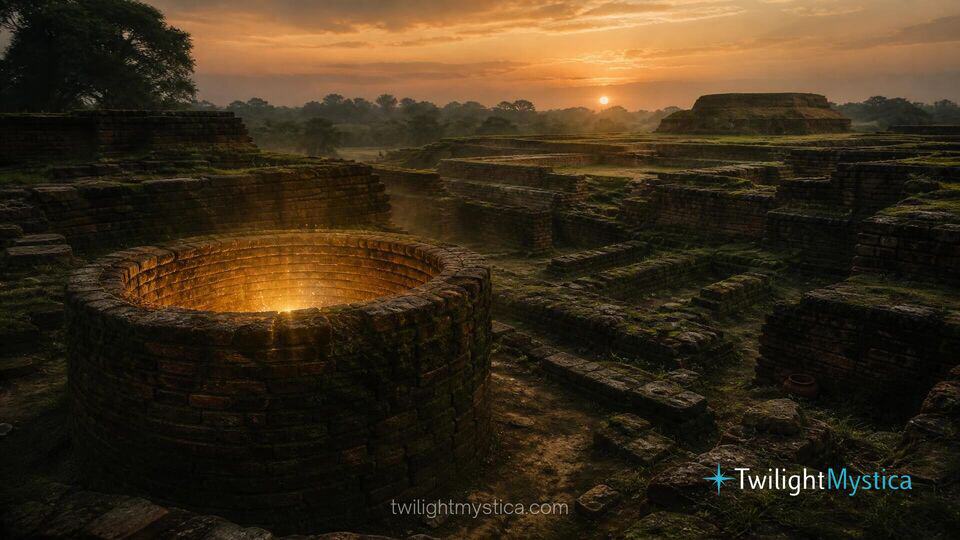
Mahasthangarh supernatural legends occupy a fascinating space where archaeology, religion, memory, and fear all meet. Located in Bogura, Bangladesh, Mahasthangarh is widely recognized as one of the oldest urban archaeological sites in the region. Historically, it is associated with ancient Pundranagara, but in popular imagination it is far more than an old fortified city. For many visitors and local storytellers, the site is a layered landscape filled with vanished kingdoms, saintly miracles, cursed rulers, hidden tunnels, and ruins that seem especially alive after sunset.
At the center of many of these stories is Jiat Kunda, a legendary well or sacred water source said to possess life-restoring qualities. Around it gather tales of King Parasuram, Shah Sultan Balkhi, divine punishment, and unexplained presences near the old citadel. Whether one views these accounts as faith-based truth, symbolic folklore, or atmospheric storytelling shaped by centuries of retelling, they remain essential to understanding how Mahasthangarh lives in the cultural imagination.
This article explores the best-known legends, explains their historical background, and shows why these tales still matter. Think of Mahasthangarh as a palimpsest: one layer is brick and earth, another is history, and a third is supernatural memory written over both.
The Historical Significance of Pundranagara and King Parasuram
Before diving into the supernatural elements, it helps to understand why Mahasthangarh inspires such powerful stories. The site is linked to ancient Pundranagara, a major settlement and administrative center in early Bengal. Old capitals often attract myth because they represent lost power. Once a city falls into ruin, people naturally ask what happened there, who ruled it, and whether some moral or cosmic drama caused its decline.
In local tradition, one of the most important figures tied to Mahasthangarh is King Parasuram. He appears in folklore as a powerful ruler whose fate became entwined with the arrival of Shah Sultan Balkhi, a saintly figure credited with spreading Islam in the area. In many retellings, Parasuram is not just a king from the past; he becomes a symbol of worldly authority facing spiritual destiny. This gives the legends a dramatic structure much like an epic contest between crown and sanctity.
An easy analogy is to think of Parasuram in the same way medieval legends portray proud kings confronting prophets or saints. Whether the details are historically exact matters less in oral tradition than the deeper message: temporal power may dominate the present, but sacred power defines the future.
Why rulers become supernatural figures
Across South Asia, ancient rulers often drift from history into legend. Once records become incomplete, memory fills the gaps with miracles, curses, betrayals, and prophecies. That is why Parasuram is remembered not merely as a political actor but as part of a cosmic narrative tied to Mahasthangarh’s fall and transformation.
This pattern appears in other regional haunting traditions too, where real places gain ghostly reputations over time. Readers interested in how history and fear merge in Bengali storytelling may also enjoy Lalbagh Fort - A Historical Haunted Place in Bangladesh, another example of architecture becoming a vessel for legend.
The Sacred Legend of Jiat Kunda and Shah Sultan Balkhi
No discussion of Mahasthangarh supernatural legends is complete without Jiat Kunda. The name itself is wrapped in wonder, and the well is commonly described in folklore as a source of miraculous power. For believers, it is no ordinary reservoir. It is a sacred point where divine intervention touched the landscape.
Most popular versions of the legend connect Jiat Kunda to Shah Sultan Balkhi, the revered saint whose arrival altered the religious and cultural identity of the region. In oral accounts, the saint is associated with miracles, spiritual authority, and the defeat or displacement of older powers. Jiat Kunda becomes one of the strongest symbols of that authority because water in folklore rarely means just water. It often represents healing, rebirth, purification, and access to the unseen.
In practical storytelling terms, Jiat Kunda works like a supernatural anchor. Every legendary landscape needs one object or site that concentrates the mystery. In some tales it is a tree, in others a shrine, pond, cave, or battlefield. Here, it is the well.
The Miraculous Life-Giving Well
The most famous belief surrounding Jiat Kunda is that its water could restore life or vitality. Some versions say the dead could be revived; others present the miracle more cautiously, claiming the water healed grave injuries, revived the near-dead, or granted extraordinary recovery. As with many sacred legends, the exact claim changes from narrator to narrator, but the core idea remains stable: this was water touched by blessing.
To understand why such a belief endured, consider how communities treat springs and wells in traditional societies. They are essential, intimate, and often mysterious. A well that never seems ordinary can quickly become a focus of reverence. If one remarkable recovery happened nearby, oral tradition could magnify it across generations until the place itself was seen as holy.
This is similar to how certain forests or ponds in Bengali folklore become spiritually charged settings. For instance, water-centered supernatural beliefs also appear in tales like The Legend of Joldano: Riverine Water Spirits in Bengali Folklore, where bodies of water are treated as thresholds between the human and unseen worlds.
The Defeat of Parasuram and Sacred Myths
Another major strand of the story links Jiat Kunda to the defeat of King Parasuram. In legend, Shah Sultan Balkhi’s spiritual force overcomes the king’s worldly might. Sometimes this is told as a direct confrontation, and sometimes as a broader sacred triumph that redefined the land. Jiat Kunda then becomes proof that divine favor had shifted.
Folklore often simplifies complex social change into vivid scenes: a saint arrives, a king resists, a miracle occurs, and the old order falls. That narrative may not function as literal historiography, but it is highly effective cultural memory. It turns transition into story. In that sense, Jiat Kunda is not only a miraculous well; it is a metaphorical well of legitimacy, drawing authority from the sacred.
Faith, politics, and place memory
One reason this legend remains compelling is that it speaks to multiple audiences at once. Devout listeners hear a saint’s miracle. History lovers see the memory of conquest and conversion. Folklore readers recognize a classic motif: the holy stranger who transforms the land. That layered meaning gives the tale unusual durability.
Haunted Ruins and Local Folklore Surrounding the Citadel
Beyond saintly legend, Mahasthangarh is also surrounded by stories of haunted spaces. Old walls, broken gateways, elevated earthworks, and isolated corners of the citadel have long encouraged speculation. Locals have shared tales of uncanny silence, sudden chills, whispers at night, strange lights, and a feeling of being watched among the ruins. Even when no single ghost story dominates, the entire landscape can carry a haunted reputation.
This is a common pattern in ruin folklore. When a place once held intense human activity and later falls quiet, the imagination resists the silence. People begin to feel that the past has not fully left. The abandoned site becomes like an empty theater after the audience is gone: the structure remains, but echoes suggest invisible company.
Why ruins feel haunted
There are several reasons Mahasthangarh lends itself to supernatural interpretation:
- Great age: Ancient sites naturally inspire awe and uncertainty.
- Fragmentary history: Gaps in the record invite legend to fill in missing details.
- Sacred associations: Shrines, saints, and miracle stories intensify the sense of unseen presence.
- Atmosphere: Large earthen walls and open ruins change dramatically at dusk, making ordinary sounds feel uncanny.
In other words, haunted folklore does not arise randomly. It grows where emotion, memory, and environment reinforce each other.
Mahasthangarh’s reputation also fits into a wider Bengali pattern in which certain spaces become spiritually charged after dark. Similar motifs appear in stories of roads, forests, ponds, and marshland spirits, such as The Legend of Kander Bhoot: Bengal's Crying Marshland Spirit and The Haunting of Shahidullah Hall Pond at Dhaka University.
Examples of local supernatural motifs
While versions vary, folklore around Mahasthangarh often includes several recurring motifs:
- Guardian spirits protecting buried relics or sacred zones.
- Cursed ground connected to the fall of a ruler or battlefield deaths.
- Invisible processions or phantom sounds that suggest the ancient city is still active in another realm.
- Warning apparitions meant to keep the disrespectful away from holy or historically charged places.
These motifs serve social purposes too. They discourage vandalism, encourage reverence, and remind people that heritage sites should not be treated casually. In that sense, ghost stories can function almost like cultural fencing around the past.
How Mahasthangarh Supernatural Legends Function in Culture
These legends are not simply spooky entertainment. They have several real-world use cases in the way communities understand place and identity.
1. Preserving memory
Folklore keeps names, events, and figures alive long after formal historical knowledge fades. A child may first hear of Parasuram or Shah Sultan Balkhi through a tale of Jiat Kunda before ever reading about Mahasthangarh in a book.
2. Making history emotionally accessible
Dates and ruins can feel distant. Legends make them vivid. A miraculous well is easier to remember than a dry archaeological summary. Story acts like a bridge between scholarship and public imagination.
3. Reinforcing sacred respect
When a site is believed to hold spiritual power, visitors are more likely to approach it with caution and reverence. Even skeptics often behave differently in places wrapped in sacred folklore.
4. Supporting heritage tourism
Travelers are often drawn not just to what a place was, but to what people still say about it. The combination of archaeology and legend makes Mahasthangarh especially compelling. It offers both evidence and atmosphere.
5. Connecting local stories to wider Bengali folklore
The legends of Mahasthangarh belong to a broader web of supernatural storytelling across Bangladesh and Bengal. Readers exploring that larger world may also find useful parallels in The Mystery of Harong Hurong Cave: Sylhet's Haunted Cavern Legend, where place, fear, and oral tradition also merge into a powerful local mythscape.
Reading the Legends: Literal Truth or Symbolic Truth?
A useful way to approach these stories is not to ask only, “Did this happen exactly as told?” but also, “What cultural truth is the story carrying?” Folklore often behaves like a coded archive. A miracle may preserve memory of a shrine’s importance. A haunted ruin may express grief over a lost city. A saint-versus-king narrative may reflect profound social transformation remembered through symbolic drama.
That does not strip the stories of wonder. On the contrary, it shows why they endure. They work on multiple levels at once: spiritual, historical, emotional, and imaginative. Like moonlight on ancient brick, their power comes partly from what they reveal and partly from what they leave in shadow.
Conclusion: Why These Legends Still Matter
The supernatural world of Mahasthangarh and Jiat Kunda remains compelling because it joins the visible and invisible histories of a famous site. On one level, Mahasthangarh is an archaeological landmark tied to ancient Pundranagara. On another, it is a living legendscape animated by stories of King Parasuram, Shah Sultan Balkhi, the miraculous Jiat Kunda, and the haunted quiet of ruined walls.
In summary, Mahasthangarh supernatural legends matter not because they replace history, but because they enrich it. They show how communities remember conquest, sanctity, loss, and wonder. They turn a fortified city into a cultural memory theater where saints bless wells, kings fall from power, and old stones seem to remember more than they say. For anyone interested in Bengali folklore, Mahasthangarh is not just a place to visit. It is a place to listen.