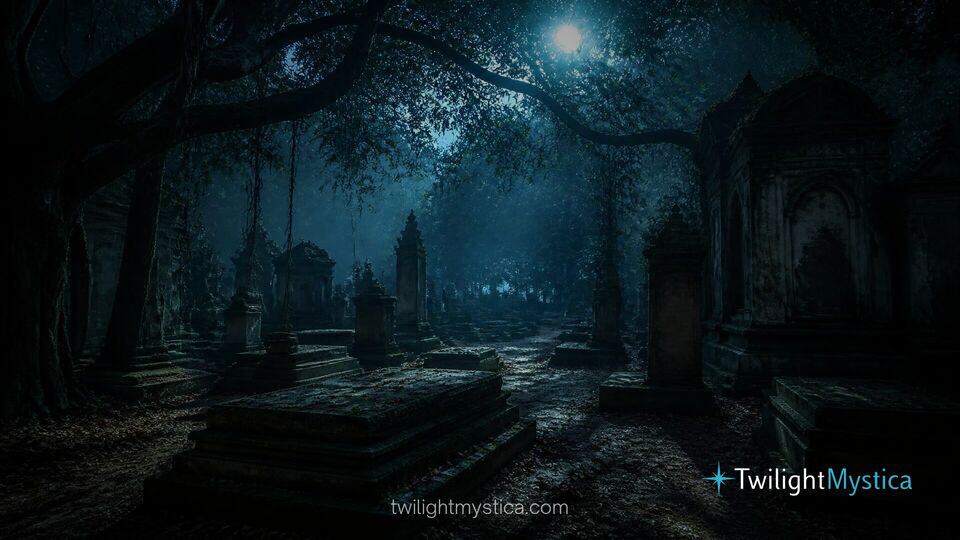
The Wari Christian Cemetery ghost story sits at the crossroads of history, memory, and imagination. In Old Dhaka, where narrow lanes, fading mansions, and colonial-era landmarks still shape the city’s atmosphere, cemeteries naturally become magnets for mystery. Wari Christian Cemetery is one such place. To some, it is simply a historic burial ground tied to Dhaka’s Christian community and colonial past. To others, it is a place where silence feels heavier than usual, shadows seem to linger too long, and stories of ghostly presences pass from one generation to the next.
What makes this cemetery fascinating is not only the possibility of haunting, but the way people interpret it. A graveyard is like an old archive without pages: instead of written chapters, it holds names on stone, weathered dates, forgotten family histories, and the emotional residue of the past. In places like Old Dhaka, that atmosphere can easily evolve into folklore. This article explores the cemetery’s historical setting, the paranormal legends attached to it, and why such tales remain powerful in the cultural imagination.
Historical Background of Wari Christian Cemetery
Colonial Era Origins and Architectural Legacy
Wari developed during Dhaka’s expansion under colonial influence, and Christian institutions in the area reflected the presence of missionaries, traders, officials, and local converts connected to British-era urban life. Cemeteries from that period were not designed only as practical burial spaces. They were also cultural markers, shaped by European funerary customs, Christian symbolism, and the social hierarchies of the time. As a result, burial grounds like Wari Christian Cemetery often feature old crosses, stone tablets, enclosed family plots, and decaying boundary walls that create an unmistakably solemn environment.
Even without a ghost story attached, such a site can feel uncanny. Weathered graves suggest interrupted conversations with the past. Cracked marble and moss-covered inscriptions remind visitors how quickly memory fades when communities change. In that sense, the cemetery works almost like a time capsule. Just as a dusty theater can feel haunted by performances long finished, a colonial graveyard can seem haunted by lives once central to the neighborhood but now largely forgotten.
This is one reason historic cemeteries often attract legend. Their visual language encourages storytelling. A tilted headstone looks ominous. A broken angel statue feels symbolic. A row of graves under low trees creates the perfect frame for rumor. Old Dhaka, with its layered urban history and love of oral storytelling, gives those impressions fertile ground to grow.
Paranormal Legends Surrounding Old Dhaka's Graveyard
Reported Apparitions and Spectral Encounters
The core of the Wari Christian Cemetery ghost story usually revolves around classic graveyard haunting motifs. Local tales speak of pale figures seen near tombs, unexplained movements in the dark, and a strange feeling of being watched after sunset. In some retellings, passersby claim to have spotted a person standing silently among the graves, only for that figure to vanish on a second glance. In others, caretakers or nearby residents mention footsteps, whispers, or sudden chills despite still air.
These accounts follow a familiar pattern found in haunted-site folklore across South Asia and beyond. The details are often less important than the emotion they produce. A ghost story survives because it captures mood. The story does not need every witness to agree on what they saw; it only needs enough suggestive details to make listeners picture the scene for themselves. That is why one person’s “white shadow” and another person’s “silent woman near the gate” can become part of the same legend.
A helpful analogy is fog around a streetlamp. The light is real, but the fog softens and reshapes what we think we see. In the same way, a real cemetery, dim lighting, nighttime silence, and prior belief can combine into a powerful supernatural experience. That does not mean every story is false. It means ghost lore often lives in the space between sensory experience and cultural expectation.
Local Urban Legends and Nighttime Whispers
Old Dhaka has long been a city of whispered lore. Stories travel through tea stalls, family conversations, student circles, and neighborhood memory. In that environment, Wari Christian Cemetery becomes more than a burial site. It turns into a stage for urban legend. Some versions of the tale suggest spirits of colonial-era dead still roam the grounds. Others imply the cemetery becomes spiritually active at particular hours of the night, especially when the streets are nearly empty and ambient city noise fades away.
These narratives resemble other regional haunting traditions in which location matters as much as the entity itself. For example, Bengali folklore often ties fear to specific landscapes such as ponds, groves, fields, or lonely roads. If you are interested in how place-based fear works in nearby folklore, the eerie campus setting in The Haunting of Shahidullah Hall Pond at Dhaka University offers a useful comparison. In both cases, an ordinary place becomes uncanny because collective imagination overlays it with repetition and warning.
Nighttime cemetery legends also serve a social function. They discourage trespassing, heighten respect for the dead, and reinforce the idea that certain spaces should not be treated casually. In practical terms, a ghost story can work like an unwritten fence. People may ignore a signboard, but they are less likely to ignore a story about seeing an apparition by the graves.
The Wari Christian Cemetery Ghost Story in Cultural Context
To understand why this legend persists, it helps to see it not only as a horror tale but as a cultural text. Ghost stories often preserve anxieties that formal history leaves out. Colonial cemeteries can symbolize foreign rule, religious difference, class distinction, disease, mortality, and urban transformation all at once. When people tell stories about restless spirits in such places, they may also be expressing discomfort with unresolved history.
This is common in folklore. A haunting can act like a metaphor for memory that refuses to stay buried. The dead in such stories are not always frightening because they attack the living. Sometimes they are frightening because they remind the living that the past is unfinished. That same pattern appears in many Bengali supernatural traditions, from wandering female spirits to place-bound entities rooted in local trauma. Articles like The Legend of Petni: Unmarried Female Spirits of Bengali Lore and The Legend of Nishi Dak: The Terrifying Call of the Night Spirit show how deeply social fear and supernatural belief can intertwine.
Why Colonial-Era Cemeteries Feel Especially Haunted
Colonial graveyards tend to generate stronger haunting lore than newer cemeteries for a few clear reasons. First, age creates visual drama. Older graves are damaged, overgrown, and harder to interpret. Second, historical distance invites speculation. If no one remembers the people buried there personally, imagination fills the silence. Third, architecture matters. Arched entrances, iron gates, mossy monuments, and fading epitaphs create a cinematic setting before any ghost appears in the story.
Think of it like an abandoned library after dark. Books alone are not scary, but dust, silence, and neglect change their emotional effect. In the same way, graves alone do not create fear; context does. Wari Christian Cemetery embodies exactly that kind of context.
Use Cases: Why People Read and Retell This Legend
An informative article on the Wari Christian Cemetery ghost story can be useful in several ways. For folklore readers, it offers a case study in how urban legends form around historical places. For heritage enthusiasts, it highlights how neglected or little-discussed sites still carry cultural value. For horror fans, it provides a grounded haunting narrative that feels more unsettling because it is tied to a real location rather than a fictional castle or invented phantom.
- For students of folklore: the story shows how oral tradition transforms architecture into narrative.
- For travelers and culture readers: it adds depth to Old Dhaka beyond food streets and markets.
- For writers and creators: it demonstrates how atmosphere, setting, and ambiguity can be more effective than explicit monsters.
- For local history audiences: it encourages interest in preserving overlooked colonial-era sites.
A good example is the way ghost stories can draw attention to places otherwise ignored. Once a site becomes part of local lore, people begin asking questions: Who is buried there? When was it established? Why did these rumors begin? In that sense, a haunting legend can unexpectedly become a gateway to historical curiosity.
Preserving History and Folklore in Dhaka
Whether one believes in ghosts or not, the cemetery deserves attention as both a historical and cultural landmark. Preserving a place like Wari Christian Cemetery means preserving more than stone. It means protecting the layered meanings attached to it: religious heritage, colonial urban history, neighborhood identity, and the oral folklore that keeps it present in public memory.
There is also value in documenting such legends carefully. Doing so does not require treating every claim as proven fact. Instead, it means respecting the difference between history and folklore while recognizing that both matter. History tells us what can be documented. Folklore tells us what people feel, fear, and remember. Together, they offer a fuller picture of place.
This balance is especially important in South Asian supernatural writing. Some legends invite symbolic interpretation, while others may reflect environmental misreadings, nighttime acoustics, or psychological suggestion. The famous mystery of eerie lights in wetlands, explored in The Legend of Aleya Ghost Lights in Bangladeshi Wetlands, is a strong example of how folklore and possible natural explanations can coexist without canceling each other out.
Folklore as a Living Heritage
Ghost stories survive because they are retold, reshaped, and adapted to new audiences. A grandfather’s warning, a rickshaw driver’s anecdote, a student’s late-night dare, and an online article can all keep the same legend alive in different forms. That makes the Wari cemetery tale a form of living heritage. It is not frozen in one “official” version. It grows as the city grows.
For readers interested in the broader map of Bengali spectral belief, place-based hauntings connect naturally with spirit traditions such as The Legend of Gecho Bhoot: Tree-Dwelling Spirits of Bengali Lore. Both show how specific environments help define the personality of a haunting.
Conclusion
The Wari Christian Cemetery legend endures because it offers more than a scare. It brings together Old Dhaka’s colonial past, the emotional power of cemeteries, and the enduring human urge to explain uneasy places through story. The Wari Christian Cemetery ghost story may never be verified in any scientific sense, but that is not the only measure of its importance. Its real power lies in atmosphere, symbolism, and memory.
In recap, Wari Christian Cemetery is significant as a colonial-era burial ground, compelling as a setting for ghost lore, and valuable as a window into Dhaka’s living folklore. Like many haunted places, it stands between documented history and whispered possibility. That in-between space is exactly where legends thrive.